
What a day on safari is actually like
Most days are built around two outings, with a long quiet middle. The interesting part is how the place changes that pattern.
The usual rhythm
A guided day usually starts before sunrise. You leave camp with tea or coffee, while the air is cool and animals are still moving. The drive lasts a few hours. You come back for a proper breakfast, not a snack in the car.
Midday is the slow part. Heat pushes a lot of wildlife into shade, and camps expect you to rest, swim if there is water, or sit with a book. The second outing begins in the afternoon and runs until the light goes. Dinner is back at camp.
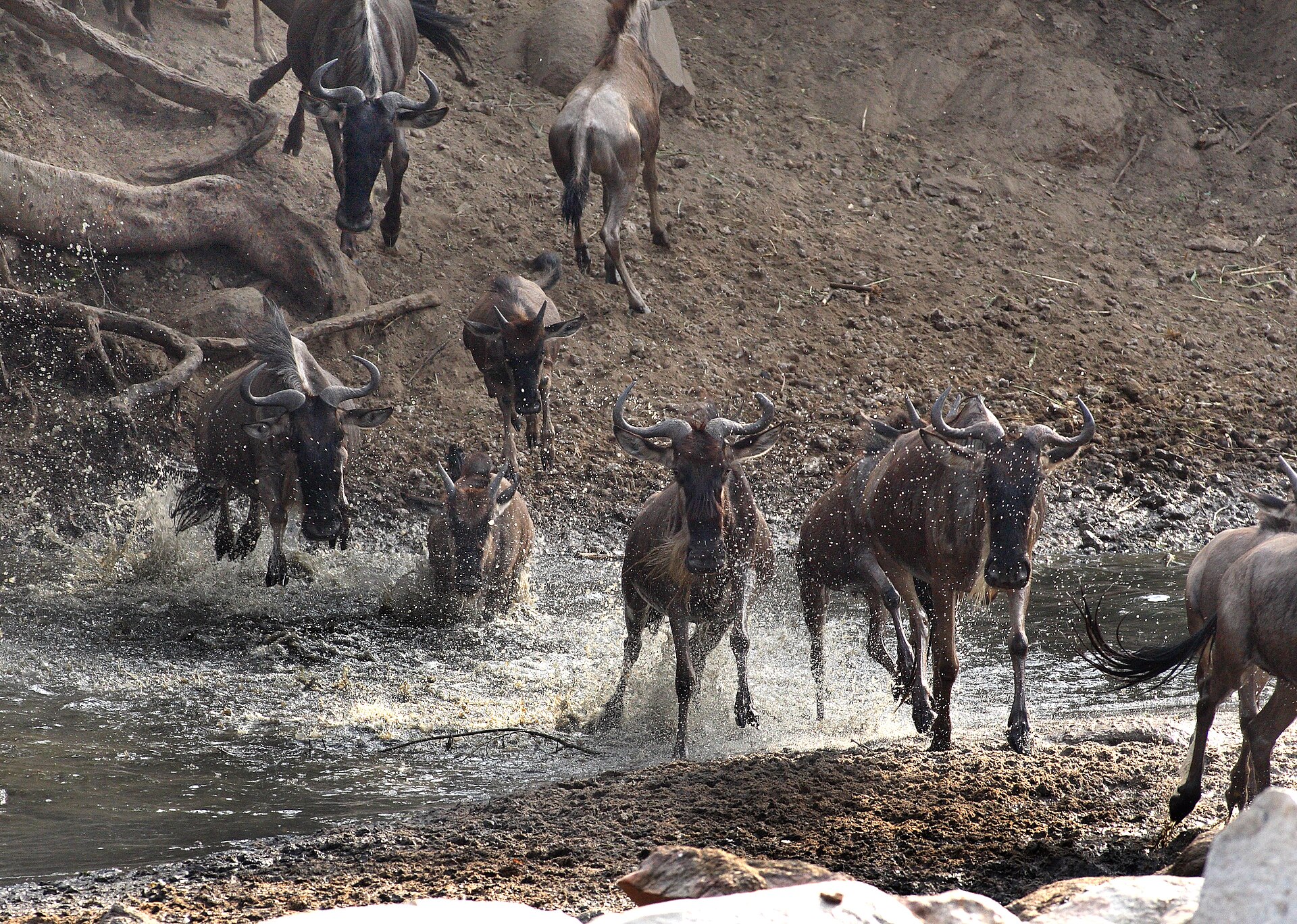
That shape holds in the Masai Mara, the Serengeti, Kruger, and most classic reserves. What changes is the vehicle, the distance from camp to the wildlife, and whether the afternoon ends at a river, a waterhole, or an open plain.
Drives, boats, and walks
A game drive is a shared or private open vehicle with a guide. In a national park you stay on the tracks and you stay in the vehicle unless the guide stops at a designated place. In some private reserves the guide can leave the road and, where the rules allow, drive after dark.
Water changes the day. In the Okavango Delta a morning might be a mokoro or a motorboat instead of a truck. On the Chobe River the wildlife is watched from the water, which is often calmer than a busy park road.
Walking safaris, especially in South Luangwa and parts of Zimbabwe, put you on foot with a guide and a scout. The pace is slow. You notice tracks, insects, and smaller animals that a vehicle drives past. A walk is not a hike across the park. It is a few hours, and you return to camp.
What people underestimate
The day is early. If you are not a morning person, the first drive is still the one most guests remember, because that is when predators and herds are easiest to see.
You will sit. A drive can be three hours with long stretches of nothing, then ten minutes that justify the morning. Guides stop for birds and tracks, not only for lions.
Nights are dark away from cities. Some camps offer a night drive where the park allows it. Others do not. If a night drive matters to you, say so when you ask for a quote, because it is a rule of the place, not a promise every camp can make.